
Makhana Nutrition & Calories
Makhana, also known as fox nuts or lotus seeds, is widely considered a nutrient-dense and healthy snack. It offers an excellent combination of protein, complex carbohydrates, fiber, and essential minerals while being naturally low in fat and gluten-free.
Quick Answer:
Makhana contains approximately 347 calories per 100 grams and is rich in protein, fiber, carbohydrates, calcium, and antioxidants. It is low in fat, gluten-free, and considered a healthy snack suitable for weight management and overall health.
You may also like:
- What is Makhana?
- Is Makhana Healthy? Benefits, Daily Intake & Safety
- Makhana for Weight Loss & Weight Gain
- Makhana Health Benefits
Due to its nutritional value and light texture, makhana is commonly included in weight loss diets, fasting meals, and healthy snacking routines.
Makhana Calories Per 100g
One of the most searched questions is about makhana calories. On average:
- Calories in 100g makhana: Approximately 340–350 calories
- Protein: 9–10 grams
- Carbohydrates: 75–77 grams
- Fat: 0.5–1 gram
- Fiber: 7–8 grams
The low fat content makes makhana healthier compared to many fried snacks.
A Bowl of Makhana Calories
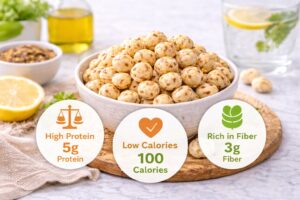
A typical bowl of roasted makhana (about 25–30 grams) contains approximately:
- Calories: 85–100 calories
This makes makhana a low-calorie snack when eaten in moderate portions without excessive oil or butter.
A Handful of Makhana Calories
A handful of makhana (around 15–20 grams) contains approximately:
- Calories: 50–70 calories
This portion size is often recommended for daily snacking.
Is Makhana High in Protein?
Makhana or lotus seed contains a moderate amount of plant-based protein compared to other snacks. While it is not as protein-rich as lentils or soy, it still contributes to daily protein intake, especially for vegetarians.
Protein helps with:
- Muscle repair
- Satiety and hunger control
- Energy balance
Is Makhana Fat Free?
Makhana is extremely low in fat and contains minimal saturated fat, making it heart-friendly. However, roasting with butter or excessive oil can increase calorie content significantly.
Is Makhana Fiber Rich?
Yes, makhana contains dietary fiber that supports digestion and helps maintain gut health. Fiber also promotes fullness, making makhana helpful for weight management.
Is Makhana Low-Calorie Food?
Compared to fried chips, namkeen, or processed snacks, makhana is considered a low-calorie and healthier alternative when consumed in moderate portions.
Its light texture creates a feeling of fullness without excessive calorie intake.
Is Makhana Rich in Calcium?
Yes, makhana contains calcium, which supports:
- Bone strength
- Teeth health
- Muscle function
This makes it beneficial for children, adults, and elderly individuals.
Is Makhana Rich in Iron?
Makhana contains a moderate amount of iron, which helps:
- Improve hemoglobin levels
- Support oxygen transport in the body
- Reduce fatigue
Is Makhana Rich in Potassium?
Yes, makhana contains potassium, an essential mineral that helps regulate blood pressure, nerve function, and muscle contractions.
Is Makhana Rich in Zinc?
Makhana provides small amounts of zinc, which supports immunity, wound healing, and metabolism.
Is Makhana Rich in Carbohydrates?
Yes, makhana is primarily a carbohydrate-based food. However, these are complex carbohydrates that release energy slowly, preventing sudden spikes in blood sugar levels.
This makes it suitable for sustained energy and satiety.
Is Makhana Rich in Antioxidants?
Makhana contains antioxidants such as flavonoids that help reduce inflammation and protect the body from oxidative stress and aging-related damage.
Does Makhana Contain Vitamin D or B12?
Makhana does not naturally contain significant amounts of vitamin D or vitamin B12. These nutrients are mainly found in animal-based foods or fortified products.
However, makhana still provides many other beneficial nutrients.
Is Makhana Organic?
Makhana can be organic if grown without chemical fertilizers or pesticides. Many brands offer organic makhana options, but consumers should check product labeling for certification.
Why Nutritionists Recommend Makhana
Nutrition experts recommend makhana because it is:
- Low in fat
- Gluten-free
- Nutrient-dense
- Easy to digest
- Suitable for all age groups
- Better than fried snacks
It fits well into balanced diets and healthy lifestyles.
Conclusion
Makhana is a nutritious, low-fat snack rich in carbohydrates, fiber, minerals, and antioxidants. Its moderate protein content, low calorie density, and digestive benefits make it an excellent addition to daily diets.
When roasted with minimal oil and salt, makhana becomes one of the healthiest snack options available.
Q1. How many calories are in 100g makhana?
Ans: 100 grams of makhana contains approximately 340–350 calories.
Q2. Is makhana good for weight loss?
Ans: Yes, makhana is low in fat and high in fiber, which helps with weight management when consumed in moderation.
Q3. Does makhana contain protein?
Ans: Yes, makhana contains plant-based protein, although in moderate amounts.
Q4. Is makhana healthier than chips?
Ans: Yes, roasted makhana is healthier than fried chips because it contains less fat and more nutrients.
Q5. Can makhana be eaten daily?
Ans: Yes, makhana can be eaten daily in moderate quantities as part of a balanced diet.
