
What is Makhana Cultivation?
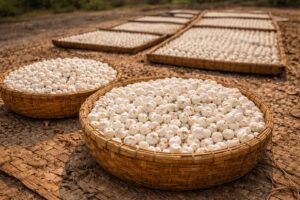
Makhana cultivation in India. Makhana cultivation refers to the farming of lotus plants for harvesting edible seeds known as makhana or fox nuts. These seeds grow inside spongy pods beneath freshwater ponds and wetlands. Once harvested, the seeds are dried, roasted, and popped to produce the white, crunchy snack widely consumed across India.

Unlike modern dry-land crops, makhana farming is a unique aquatic agriculture system that requires specific water depth, skilled labour, and traditional knowledge passed down through generations.
Quick Answer:
Makhana cultivation in India mainly takes place in shallow freshwater ponds, especially in Bihar. Farmers grow lotus plants, harvest seeds from underwater pods, and process them using traditional methods to produce fox nuts.
Explore more about makhana and its journey from ancient farming to modern superfood::
- History of Makhana – Discover the ancient roots of makhana in Indian civilization
- How Makhana is Made – Step-by-step process from lotus seed to crunchy snack
- Traditional Makhana Processing in Bihar – Inside the heritage techniques of Mithila farmers
- Makhana in Ayurveda – Medicinal uses and health benefits
- Makhana vs Other Snacks – Why makhana is healthier than popular snacks
Where is Makhana Grown in India?
India is the largest producer of makhana in the world, and most cultivation happens in eastern and central regions.
Major makhana producing states in India include:
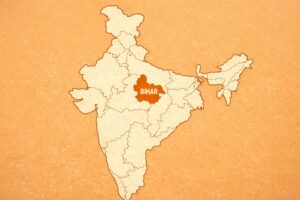
- Bihar (over 90% production)
- Madhya Pradesh
- Uttar Pradesh
- West Bengal
- Assam
- Manipur
Among these, Bihar dominates the makhana industry, especially the Mithila region.
Why Bihar is the Hub of Makhana Farming
Bihar is considered the heart of makhana cultivation due to its natural wetlands, climate, and farming expertise.
Key makhana districts in Bihar:
- Darbhanga
- Madhubani
- Saharsa
- Purnia
- Supaul
The Mithila region alone contributes the majority of India’s makhana supply. Farmers here have been cultivating lotus seeds for centuries, making it a cultural as well as economic livelihood.
Bihar has also received a GI (Geographical Indication) tag for its makhana, recognizing its unique quality and origin.
Traditional Makhana Farming Method
Makhana cultivation is still largely done using traditional manual techniques. The process includes:
1. Pond Preparation
Farmers clean and maintain shallow ponds with controlled water levels.
2. Lotus Plantation
Lotus seeds are planted in muddy pond beds.
3. Growth Phase
Plants grow for 4–5 months, forming underwater pods filled with seeds.
4. Underwater Harvesting
Farmers dive into ponds to manually collect seed pods — one of the most labour-intensive steps.
5. Sun Drying
Seeds are dried naturally under sunlight.
6. Roasting & Popping
Dried seeds are roasted in sand and cracked open to produce edible makhana.
This entire process is eco-friendly and chemical-free.
Traditional vs Modern Cultivation
| Traditional Method | Modern Method |
|---|---|
| Manual harvesting | Partial mechanization |
| Natural drying | Machine drying |
| Family labour | Commercial farms |
| Low cost | Higher investment |
Even today, traditional methods dominate, especially in Bihar, due to better quality output.
Challenges Faced by Makhana Farmers
Despite growing demand, farmers face many challenges:
- Extreme physical labour
- Seasonal income
- Flood risks
- Lack of modern equipment
- Limited government support
Underwater harvesting is especially dangerous and exhausting, requiring skilled divers.
Future of Makhana Cultivation in India
The future of makhana farming looks extremely promising due to:
- Rising global demand for superfoods
- Export potential to USA, Europe & Middle East
- Government GI protection
- Health-conscious consumers
- Use in weight loss & diabetic diets
With proper investment, mechanization, and farmer training, makhana can become a billion-dollar agricultural industry for India.
Conclusion
Makhana cultivation in India is not just farming — it is a heritage agricultural system rooted in culture, tradition, and sustainability. From the wetlands of Bihar to global health stores, makhana represents India’s contribution to the world of natural superfoods.
By supporting makhana farming, we support rural livelihoods, traditional knowledge, and healthier nutrition worldwide.
Q1. Where is makhana mainly grown in India?
Bihar is the largest producer of makhana in India, contributing over 90% of total production.
Q2. How long does makhana take to grow?
Makhana takes around 4 to 5 months from planting to harvesting.
Q3. Is makhana farming profitable?
Yes, due to rising global demand and export potential, makhana farming is becoming highly profitable.
Q4. Is makhana grown organically?
Most traditional makhana farming uses minimal chemicals and is close to organic practices.
Q5. Why is Mithila famous for makhana?
Mithila has ideal wetlands, skilled farmers, and centuries-old knowledge of lotus farming.
