
Raw Makhana vs Roasted Makhana: Which Is Healthier?
Roasted makhana is healthier and safer to eat than raw makhana. Raw makhana is very hard and difficult to digest, while roasted makhana is light, crunchy, and suitable for daily consumption.
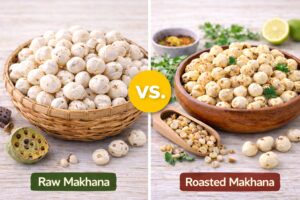
Many people get confused between raw makhana and roasted makhana because both come from the same lotus plant. However, there is a big difference in how they are processed, how they taste, and how the body absorbs their nutrients.
Many people search raw makhana vs roasted makhana to understand which form is safer and healthier for daily consumption.
Let’s understand the difference in detail.
Quick Answer:
Roasted makhana is healthier and safer to eat than raw makhana. Raw makhana is hard and difficult to digest, while roasted makhana is light, nutritious, and easy to consume daily.
Want to explore more about Makhana, read our detailed guides below:
- What is Makhana?
- Makhana Health & Nutrition
- Is Makhana Good for Diabetes?
- Makhana for Weight Loss
- How Makhana is Made
What Is Raw Makhana?
Raw makhana refers to the unprocessed lotus seeds harvested directly from ponds and wetlands. These seeds are naturally very hard and dense.
Raw makhana:
- Has a hard outer shell
- Is brown or green in color
- Is not edible in natural form
- Cannot be chewed or digested properly
In rural areas, raw makhana is considered an agricultural product, not a snack.
What Is Roasted Makhana?
Roasted makhana is the edible form of lotus seeds. It is produced by roasting raw lotus seeds over heat, which causes them to pop and become white, light, and crunchy.
Roasted makhana:
- Is easy to chew
- Has a mild nutty taste
- Is safe for all age groups
- Is commonly eaten as a healthy snack
This is the form of makhana sold in markets and used in recipes.
Nutritional Comparison: Raw Makhana vs Roasted Makhana
| Feature | Raw Makhana | Roasted Makhana |
|---|---|---|
| Edible | No | Yes |
| Texture | Hard | Light and crunchy |
| Digestion | Difficult | Easy |
| Safety | Not recommended | Safe |
| Taste | Bland | Nutty |
| Nutrient absorption | Low | High |
| Daily consumption | No | Yes |
Digestibility and Safety
Raw makhana is extremely hard and cannot be digested by the human body. Eating raw makhana can damage teeth and cause stomach discomfort.
Roasting changes the internal structure of the seed, making nutrients more accessible and easier for the digestive system to absorb.
That is why roasted makhana is:
- Recommended by nutritionists
- Used in Ayurveda
- Given to children and elderly
Which Is Better for Weight Loss?
Roasted makhana is far better for weight loss because:
- It is low in calories
- High in fiber
- Keeps you full for longer
- Reduces cravings
Raw makhana cannot be consumed and therefore has no role in weight management.
Which Is Better for Diabetes?
Roasted makhana is ideal for diabetics because:
- Low glycemic index
- Slow digestion
- Does not spike blood sugar
Raw makhana is not suitable for diabetic diets because it is not edible.
Nutritional Benefits of Roasted Makhana
Roasted makhana contains:
- Protein – supports muscle health
- Magnesium – improves heart health
- Potassium – regulates blood pressure
- Antioxidants – reduce inflammation
- Fiber – improves digestion
These nutrients are locked inside raw makhana and become available only after roasting.
Can We Eat Raw Makhana After Soaking?
No. Soaking does not make raw makhana edible.
It must be roasted and popped before consumption.
Which One Should You Eat?
Always choose roasted makhana.
Raw makhana:
- Is not meant for eating
- Is used only for processing
Roasted makhana:
- Is nutritious
- Is safe
- Is delicious
- Fits into daily healthy diet
Final Verdict: Raw Makhana vs Roasted Makhana
Roasted makhana is clearly better and healthier than raw makhana.
Raw makhana is just the raw agricultural seed.
Roasted makhana is the superfood.
So if you want:
- Better digestion
- Weight control
- Diabetes-friendly snack
- Natural protein source
So when comparing raw makhana vs roasted makhana, roasted makhana clearly wins in terms of nutrition, digestion, and safety.
Q1. Is raw makhana safe to eat?
Ans: No, raw makhana is very hard and not meant for direct consumption.
Q2. Why is roasted makhana better?
Ans: Because roasting makes it digestible and unlocks nutrients.
Q3. Can I eat raw makhana after soaking?
Ans: No, soaking does not make it edible.
Q4. Is roasted makhana good for weight loss?
Ans: Yes, it is low calorie and filling.
Q5. Is roasted makhana good for diabetics?
Ans: Yes, it has low glycemic index.
