
Where does makhana come from?
How Makhana is made, for this we should know where Makhana comes from. Makhana comes from the seeds of the lotus plant (Euryale ferox), which grows in shallow freshwater ponds and wetlands. These ponds are mainly found in Mithila region of Bihar, India, along with parts of Uttar Pradesh, Assam, and West Bengal.
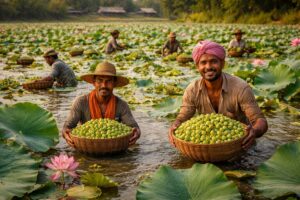
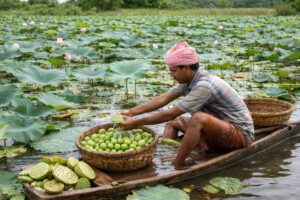
Bihar alone contributes to more than 85% of the world’s makhana production, making it the global hub for fox nuts.
The lotus plant produces seed pods underwater. Inside these pods are hard black seeds, which are the raw form of makhana.
Quick Answer:
Makhana is made from lotus seeds that are harvested from freshwater ponds, dried, roasted in iron pans, and then popped to form white crunchy fox nuts. The seeds are peeled, graded, and roasted again before final packaging.
Want to explore more about makhana? Read our detailed guides:
- What is Makhana? – Complete beginner guide to lotus seeds and fox nuts
- History of Makhana – Ancient origins and cultural significance
- Makhana in Ayurveda – Ayurvedic benefits and medicinal uses
- Makhana Benefits – Health benefits for weight loss, heart & diabetes
- Makhana Nutrition – Nutritional value per 100g
Step-by-step process of making makhana
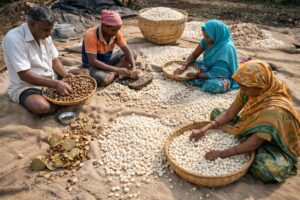
1. Harvesting lotus seeds
Farmers dive into ponds and manually collect lotus seeds from underwater plants. This is one of the most difficult and risky stages, as it requires skill, stamina, and experience.
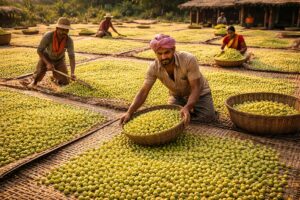
2. Drying the seeds
The freshly harvested seeds are sun-dried for several days to reduce moisture. This makes them suitable for roasting and popping.
3. Roasting in iron pans
The dried seeds are roasted in traditional iron pans over wood fire. This process hardens the outer shell and prepares the seed for popping.
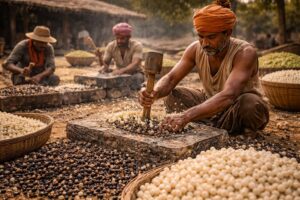
4. Popping process
Next how makhana is made. The roasted seeds are then cracked using wooden hammers. When struck correctly, the inner seed pops out, forming the white makhana we recognize.
This step is completely manual and requires high precision.
5. Peeling and grading
The popped makhana is peeled to remove remaining shells and then graded based on size, shape, and quality.
6. Final roasting and packing
Finally, makhana is lightly roasted again to enhance crunchiness and shelf life. It is then packed for distribution.
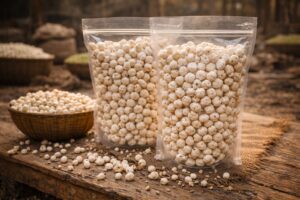

Traditional makhana processing in Bihar
What makes makhana special is that even today most of its processing is manual. Entire families in Bihar depend on this industry for livelihood.
Unlike factory-produced snacks, makhana retains its authenticity because:
- No machines for popping
- No chemical treatment
- No artificial processing
This is why makhana is considered one of the most natural superfoods.
Why makhana processing is labor-intensive
Makhana production is one of the most labor-intensive food processes in India because:
- Harvesting is done underwater
- Popping requires manual hammering
- Each seed is individually processed
- No automation in key stages
This explains why high-quality makhana is premium-priced and valued globally.
Is makhana processed naturally?
Yes. Makhana is 100% naturally processed.
There is:
- No chemical extraction
- No artificial coloring
- No preservatives
- No industrial refining
The entire transformation from seed to snack happens through heat, drying, and manual effort only.
This makes makhana:
- Safe for kids
- Ideal for elderly
- Perfect for diabetics
- Suitable for Ayurveda & fasting
Conclusion
The journey of how makhana is made from muddy ponds to clean packaged superfood is truly remarkable. It is one of the few foods in the world that is still processed using traditional, eco-friendly, and human-powered methods.
Understanding how makhana is made helps you appreciate why it is:
- Premium
- Nutritious
- Sustainable
- Culturally significant
When you eat makhana, you’re not just eating a snack — you’re consuming a product of centuries-old Indian wisdom.
Q1. How is makhana different from popcorn?
Makhana comes from lotus seeds, while popcorn comes from maize. Makhana is naturally processed and much lower in calories and fat.
Q2. Is makhana fried?
No. Makhana is roasted and popped, not fried.
Q3. Is makhana processed in factories?
Mostly no. Traditional processing is still manual in rural India.
Q4. Why is makhana expensive?
Because the harvesting and popping process is labor-intensive and requires skilled workers.
Q5. Is makhana organic?
Naturally yes, if sourced traditionally without chemical treatment.
