
Origins of Makhana in Ancient India
The history of makhana is deeply rooted in ancient India. Makhana is obtained from the seeds of the lotus plant (Euryale ferox), which naturally grows in shallow ponds and wetlands. Archaeological and historical evidence suggests that lotus plants were cultivated and respected in Indian civilization as early as the Vedic period.
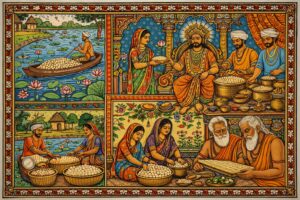

Ancient Indian texts and scriptures frequently mention lotus plants as symbols of purity, prosperity, and nourishment. The seeds of the lotus, later known as makhana, were valued not only as food but also for their medicinal properties.
Quick Answer:
Makhana, also known as lotus seeds or fox nuts, has been consumed in India for thousands of years. Its history dates back to ancient Indian civilizations where it was valued for its nutrition, medicinal properties, and cultural significance, especially in Ayurveda and traditional diets.
Want to understand makhana beyond its history? Explore these in-depth guides:
- What is Makhana? – Origin, definition, and why it is considered a superfood
- Makhana Nutrition Facts – Nutritional value and health benefits
- Makhana in Ayurveda – Ayurvedic perspective and medicinal uses
- How Makhana Is Made – Traditional processing from pond to plate
- Makhana Cultural Significance – Role in Indian rituals and traditions
Makhana in Ancient Diets
In ancient times, makhana was primarily consumed by sages, monks, and communities living near water bodies. It was considered a pure and sattvic food, suitable for meditation and spiritual practices. Because makhana is light, nourishing, and easy to digest, it was often recommended for people practicing fasting or leading disciplined lifestyles.
Historical records indicate that makhana was roasted and consumed as a snack or added to traditional dishes long before modern cooking techniques emerged.
Makhana in Ayurveda and Traditional Medicine

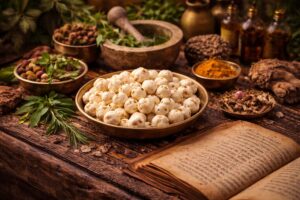
Ayurveda played a major role in preserving the importance of makhana throughout history. Ayurvedic practitioners classified makhana as a rejuvenating food that supports vitality, strength, and longevity.
Ancient Ayurvedic texts describe makhana as beneficial for digestion, kidney health, stamina, and overall balance of the body. Because of these properties, makhana became a staple in traditional Indian households, especially for people recovering from illness or weakness.
Cultural and Religious Importance of Makhana
Makhana has long held cultural and religious significance in India. It is widely used during fasting periods such as Navratri, Ekadashi, and other religious observances because it is considered pure and allowed in fasting diets.
In many regions, makhana was offered in temples and used in ritual meals. Its association with purity and nourishment made it a trusted food during spiritual occasions. We should learn more about history of makhana to understand its significance.
Traditional Cultivation in Bihar
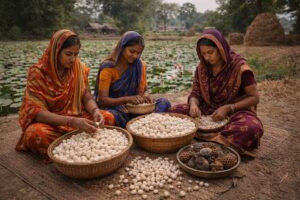

The wetlands of Bihar became the center of makhana cultivation due to their ideal climate and water conditions. Over generations, local communities developed specialized skills to harvest and process makhana seeds manually.
These traditional methods were passed down within families, preserving the authenticity and quality of makhana production. Even today, Bihar remains the largest producer of makhana in the world.
Evolution of Makhana in Modern Times
For a long time, makhana remained a regional and traditional food, largely unknown outside India. With changing lifestyles and growing awareness of healthy eating, makhana began gaining recognition as a natural superfood.
Modern nutrition science validated what ancient Indians already knew — makhana is low in calories, rich in protein, and packed with minerals. This renewed interest helped makhana transition from a traditional food to a globally appreciated health snack.
Makhana’s Journey from Tradition to Superfood


Today, makhana is enjoyed across India and increasingly around the world. Its history reflects a journey from ancient ponds and monasteries to modern kitchens and health-conscious diets.
Understanding the history of makhana helps people appreciate its cultural value, traditional wisdom, and timeless nutritional benefits. It is not just a snack, but a living example of India’s ancient food heritage.
CONCLUSION
The history of makhana reflects India’s deep connection with nature, nutrition, and traditional wisdom. From ancient rituals and Ayurvedic medicine to modern health diets, makhana has remained relevant across generations. Learning about its past helps us understand why makhana continues to be valued as one of India’s most treasured superfoods.
Q1. What is the origin of makhana?
Makhana originated in ancient India and comes from the seeds of the lotus plant grown in wetlands and ponds.
Q2. How old is makhana consumption in India?
Makhana has been consumed in India for thousands of years, dating back to ancient Indian civilizations.
Q3. Was makhana used in Ayurveda historically?
Yes. Ancient Ayurvedic texts describe makhana as a strengthening and rejuvenating food.
Q4. Why is makhana important in Indian culture?
Makhana is associated with purity and nourishment and is commonly used in fasting and religious rituals.
Q5. Which state is traditionally known for makhana production?
Bihar is traditionally known as the heart of makhana cultivation and processing.
