
Is Makhana a Dry Fruit?
Makhana is not technically a dry fruit. It is actually a seed obtained from the lotus plant. However, makhana is commonly grouped with dry fruits because of its nutritional value, health benefits, and the way it is consumed.
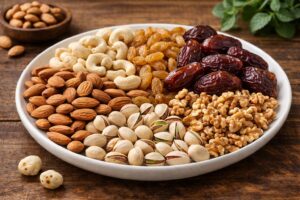
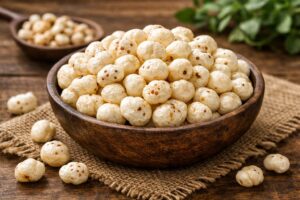
Many people get confused and often ask, “Is makhana a dry fruit?” because it is sold alongside almonds, cashews, raisins, and other dry fruits. While makhana behaves like a dry fruit in daily use, scientifically it belongs to a different category.
Let’s understand this clearly.
Quick Answer:
Makhana is not technically a dry fruit. It is a seed obtained from the lotus plant, but it is grouped with dry fruits because of its nutrition and usage.
Want to explore more about Makhana, read our detailed guides below:
- What is Makhana? – Beginner guide
- Makhana Health & Nutrition – Full nutrition overview
- Makhana Benefits – All health benefits
- Raw Makhana vs Roasted Makhana – Healthy snack comparison
- Is Makhana Better Than Popocorn? – Diabetic-friendly recipes
What Is Makhana?
Makhana, also known as fox nuts or lotus seeds, is a traditional Indian superfood. It is made by roasting and popping raw lotus seeds obtained from freshwater ponds and wetlands, mainly in Bihar, India.
Makhana is:
- Light and crunchy
- Low in calories
- Rich in protein and fiber
- High in minerals like magnesium and potassium
- Gluten-free and vegan
It is widely used as a healthy snack, fasting food, and ingredient in Indian recipes like kheer, curries, and roasted snacks.
What Are Dry Fruits?
Dry fruits are fruits that have been dried naturally or artificially to remove most of their water content. This process concentrates their nutrients and makes them long-lasting.
Common dry fruits include:
- Almonds
- Cashews
- Raisins
- Dates
- Figs
- Pistachios
Dry fruits are generally:
- High in calories
- Rich in healthy fats
- Sweet in taste
- Energy-dense
They are commonly eaten for strength, weight gain, and nutritional support.
Is Makhana Botanically a Dry Fruit?
No. Botanically speaking, makhana is not a dry fruit.
Makhana is a:
- Seed
- Derived from the lotus plant (Euryale ferox)
- Not a fruit
Dry fruits, on the other hand, come from actual fruits that have been dried.
So from a scientific point of view:
Makhana is a seed, not a dry fruit.
Why Is Makhana Considered a Dry Fruit?
Many people ask is makhana a dry fruit or not, especially since it is sold alongside almonds, cashews, and raisins.
Even though makhana is not a dry fruit scientifically, people classify it as a dry fruit because:
- It is consumed like dry fruits
- It is sold in dry fruit shops
- It has similar nutritional value
- It is used in sweets and snacks
- It has a long shelf life
In Indian households, anything that is:
- Dry
- Nutritious
- Stored in containers
- Eaten as a snack
Is often grouped under “dry fruits”.
That’s why makhana is popularly called a dry fruit and people always get confused to know, is Makhana A Dry Fruit?
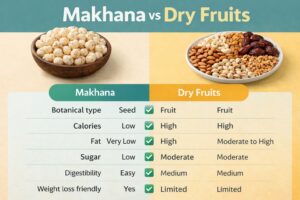
Nutritional Comparison: Makhana vs Dry Fruits
| Feature | Makhana | Dry Fruits |
|---|---|---|
| Botanical type | Seed | Fruit |
| Calories | Low | High |
| Fat | Very low | High |
| Sugar | Low | Moderate to high |
| Protein | Good | Moderate |
| Digestibility | Easy | Medium |
| Weight loss friendly | Yes | Limited |
This table clearly shows why makhana stands out.
Is Makhana Healthier Than Dry Fruits?
For many people, yes.
Makhana is healthier because:
- It is lower in calories
- It has almost no fat
- It is easy to digest
- It does not cause bloating
- It is suitable for daily consumption
Dry fruits are healthy too, but:
- They are calorie-dense
- High in fats
- Can lead to weight gain if overeaten
So for people focusing on:
- Weight loss
- Diabetes control
- Light digestion
- Daily healthy snacking
Makhana is often a better choice.
Should You Treat Makhana Like a Dry Fruit?
In practical life, yes.
You can:
- Store it with dry fruits
- Eat it as a snack
- Use it in sweets
- Add it to desserts
- Gift it during festivals
But nutritionally, you should treat makhana as:
A low-calorie superfood, not a high-fat nut.
Is Makhana Better Than Almonds and Cashews?
It depends on your goal.
If your goal is:
- Weight loss → Makhana is better
- Diabetes control → Makhana is better
- Light digestion → Makhana is better
If your goal is:
- Weight gain
- High energy intake
- Bodybuilding calories
Then almonds and cashews are better.
Final Verdict: Is Makhana a Dry Fruit?
Scientifically: No, makhana is not a dry fruit. It is a seed.
Practically: Yes, makhana is treated like a dry fruit.
The most accurate answer is:
Makhana is a seed that behaves like a dry fruit.
That’s why it is often called:
- A “healthy dry fruit”
- A “light dry fruit”
- A “superfood dry fruit”
But in reality, makhana is in a special category of its own —
a low-calorie, plant-based Indian superfood.
Q1. Is makhana technically a dry fruit?
Ans: No, makhana is technically a seed, not a dry fruit.
Q2. Why do people call makhana a dry fruit?
Ans: Because it is nutritious and consumed like dry fruits.
Q3. Is makhana healthier than almonds?
Ans: For weight loss, yes, because it is lower in calories.
Q4. Is makhana good for daily use?
Ans: Yes, it is safe for daily consumption.
Q5. Is makhana better than cashews?
Ans: For calorie control, yes.
