
Makhana Nutrition Value Per 100g: Complete Breakdown
Makhana, also known as fox nuts or lotus seeds, is one of India’s most nutritious traditional foods. In recent years, it has gained global recognition as a healthy snack due to its impressive nutritional profile. Understanding the makhana nutrition value per 100g helps you know why it is recommended for weight management, heart health and overall wellness.
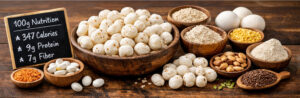
Unlike fried snacks or processed foods, makhana provides clean nutrition with minimal fat and no cholesterol.
Quick Answer:
Makhana nutrition value per 100g includes around 347 calories, high plant protein, and dietary fiber, low fat, and essential minerals like calcium, iron and magnesium, making it a healthy low-calorie snack.
Want to learn more about Makhana and its benefits? Explore our detailed Makhana health guides below:
- Is Makhana Good for Weight Loss?
- Is Makhana Good for Diabetes?
- Best Time to Eat Makhana
- Is Makhana Rich In Minerals
Makhana Nutrition Value Per 100g (Approximate)
Here is the average nutritional composition of makhana per 100 grams:
- Calories: ~347 kcal
- Protein: ~9–10 g
- Carbohydrates: ~75–77 g
- Dietary Fiber: ~7–8 g
- Fat: ~0.1–0.3 g
- Cholesterol: 0 mg
This makes makhana a low-fat, high-carbohydrate and fiber-rich food, ideal for daily consumption in moderation.
Calories in Makhana Per 100g
Many people worry about calories, but makhana or lotus seeds calories are considered clean and slow-releasing. The calories in makhana mainly come from complex carbohydrates that provide sustained energy instead of quick sugar spikes.
Because makhana is light and airy, a typical serving is much less than 100g, which makes it a low-calorie snack option compared to chips, biscuits or fried namkeen.
Protein Content in Makhana
Makhana is a good plant-based source of protein. While it does not match animal protein, it is excellent for vegetarians and people looking to reduce meat intake.
Protein in makhana helps:
- Support muscle repair
- Improve satiety
- Reduce unnecessary snacking
This is why makhana is popular among gym-goers, seniors and people on weight-loss diets.
Is Makhana Low in Fat?
Yes. One of the biggest advantages of makhana is that it is almost fat-free in its natural form. With less than 1g of fat per 100g, makhana is suitable for:
- Heart-friendly diets
- Cholesterol management
- Weight control plans
Roasting makhana without oil keeps it extremely healthy.
Dietary Fiber in Makhana
Makhana is fiber rich, which supports digestion and gut health. Fiber helps:
- Improve bowel movement
- Reduce bloating
- Control blood sugar absorption
- Promote fullness
This makes makhana beneficial for people dealing with constipation or digestive discomfort.
Vitamins and Minerals in Makhana
Apart from calories and macronutrients, makhana is rich in important minerals:
- Calcium: Supports bone strength
- Iron: Helps prevent fatigue and anemia
- Magnesium: Supports heart and muscle function
- Potassium: Helps maintain electrolyte balance
These minerals contribute to overall health, especially for children, elderly and pregnant women (when consumed in moderation).
Is Makhana a Low Calorie Healthy Snack?
Yes. When eaten in the right portion, makhana is considered a low calorie healthy snack. A small bowl or handful provides nutrition without excess calories, making it ideal for:
- Evening snacks
- Office breaks
- Light hunger between meals
Roasted vs Raw Makhana Nutrition
Raw makhana is nutritious, but dry-roasted makhana enhances taste and digestibility. Roasting does not significantly reduce nutrition if done without oil.
Roasted makhana is:
- Easier to digest
- Crunchy and satisfying
- Better for daily snacking
Why Nutritionists Recommend Makhana
Nutrition experts recommend makhana because it:
- Is gluten-free
- Is low in fat
- Contains plant protein and fiber
- Supports heart and digestive health
It fits well into Indian diets as well as modern lifestyle eating habits.
Conclusion
Understanding the makhana nutrition value per 100g clearly shows why makhana is called a superfood. It provides balanced nutrition, clean calories, and essential minerals without unhealthy fats or additives. Including makhana in your daily diet as a snack or ingredient can support long-term health naturally.
Q1. Is makhana low calorie food?
Ans: Yes, makhana is considered low calorie when eaten in normal portions.
Q2. Is makhana high in protein?
Ans: Makhana provides moderate plant-based protein suitable for vegetarians.
Q3. Is makhana fat free?
Ans: Natural makhana is almost fat-free and cholesterol-free.
Q4. Is roasted makhana healthy?
Ans: Dry-roasted makhana without oil is very healthy and easy to digest.
Q5. How much makhana should be eaten daily?
Ans: A small bowl (25–30g) is ideal for daily consumption.
