
Makhana Industry & Business in India
Makhana industry & business. The makhana industry is one of India’s most unique and culturally rooted agricultural sectors. What was once considered a traditional rural crop has now become a high-value superfood traded globally.
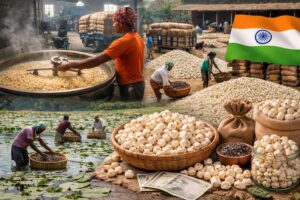

The rapid growth of the makhana industry & business is driven by rising health awareness, export demand, and India’s dominance in global production.
From the wetlands of Bihar to international health food markets, makhana has evolved into a product with massive economic, nutritional, and export potential.
This page serves as the central hub for understanding the makhana business ecosystem.
Quick Answer:
The makhana industry in India plays a major role in rural employment, agriculture, exports, and the health food sector. India produces over 90% of the world’s makhana, mainly from Bihar.
Interested in the business, farming, and economic side of makhana? Explore these in-depth resources:
- Makhana Cultivation in India – How and where makhana is grown
- Traditional Makhana Processing in Bihar – From ponds to markets
- Economic Importance of Makhana in India – Rural income & exports
- Global Journey of Makhana – From Bihar to the world
- Why Bihar Produces the Best Makhana – Geography and tradition
Makhana Cultivation in India
India is the world’s largest producer of makhana or lotus seed, contributing more than 90% of global supply.
Major cultivation regions include:
- Bihar (Mithila region)
- Eastern Uttar Pradesh
- West Bengal
- Assam
- Odisha
Makhana grows in freshwater ponds and wetlands. The crop requires:
- Warm climate
- Clean stagnant water
- Skilled manual harvesting
- Traditional processing knowledge
Traditional Makhana Processing
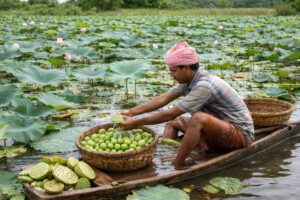
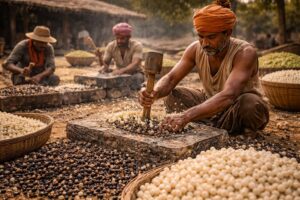
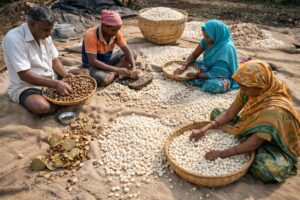
Unlike modern crops, makhana processing is still largely manual and artisanal.
The traditional process includes:
- Harvesting lotus seeds from ponds
- Sun-drying raw seeds
- Roasting at high temperature
- Cracking and popping
- Hand-polishing
- Grading and packaging
This labor-intensive method is what makes makhana premium and valuable.
Economic Importance of Makhana
The makhana industry supports:
- Thousands of farming families
- Rural employment
- Women-led cottage industries
- Small processing units
- Agricultural exports
Makhana plays a major role in:
- Poverty reduction
- Rural development
- Sustainable farming
- Indigenous food preservation
Makhana Export from India
Today, the makhana industry & business supports farmers, processors, exporters, startups, and health food brands across the country.
Makhana is now exported to:
- USA
- UK
- Canada
- UAE
- Australia
- Singapore
- Germany
Export demand is rising due to:
- Keto trend
- Vegan diets
- Gluten-free foods
- Indian superfood popularity
India holds a strong monopoly in global makhana trade.
Why Bihar Leads the World
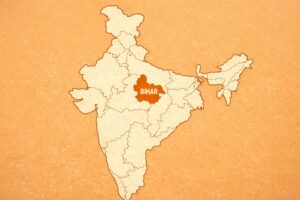
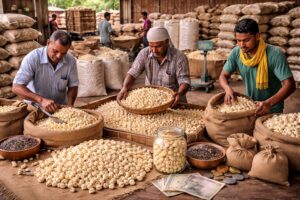
Bihar produces the highest quality makhana due to:
- Ideal wetland geography
- Generations of expertise
- Traditional processing skills
- Indigenous lotus varieties
- Cultural dependence on makhana
The Mithila region is globally considered the heart of the makhana industry.
Future of Makhana Business
The future of makhana looks extremely promising:
- Government GI tagging
- Startup investments
- Branded packaging
- Health food markets
- E-commerce demand
- International exports
Makhana is transforming from a local crop into a global superfood business.
Explore Industry Topics
This master page connects to:
- Makhana Cultivation in India
- Traditional Makhana Processing in Bihar
- Economic Importance of Makhana
- Makhana Export from India
- Global Journey of Makhana
Conclusion
The makhana industry is not just agriculture — it is a powerful combination of culture, economy, health, and heritage.
From rural ponds in Bihar to international supermarkets, makhana represents India’s ability to transform traditional knowledge into global success.
The future of the makhana industry & business looks extremely strong as India continues to lead the world in sustainable superfood production.
Q1. Which country produces the most makhana?
India is the world’s largest producer of makhana, contributing over 90% of global production.
Q2. Which state is famous for makhana in India?
Bihar, especially the Mithila region, is the largest and most famous producer of makhana.
Q3. Is makhana farming profitable?
Yes. Makhana farming is highly profitable due to rising demand, export potential, and premium pricing.
Q4. Is makhana exported from India?
Yes. Indian makhana is exported to the USA, UK, UAE, Canada, Australia, and Europe.
Q5. Why is makhana considered a premium crop?
Because it requires manual harvesting, traditional processing, and skilled labor.
Q6. What is the future of the makhana industry?
The future is very strong due to health trends, government support, startups, and global demand.
