
Economic Importance of Makhana in India
Makhana, also known as fox nuts or lotus seeds, is not just a nutritious superfood but also an economically significant crop in India. Over the last few decades, makhana has emerged as a key source of income for thousands of rural families, especially in the eastern states of India. Today, the economic importance of makhana in India extends across agriculture, employment, food processing, exports, and the growing health food industry.
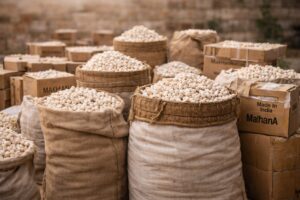

Economic importance of Makhana in India. India is the largest producer of makhana in the world, contributing more than 80–90% of global production. The crop holds a unique position in India’s agricultural economy because it is deeply connected with traditional farming systems, local communities, and sustainable wetland cultivation.
Quick Answer:
For economic importance of makhana in India Makhana plays a vital role in India’s rural economy by providing income to farmers, supporting the food processing industry, generating exports, and powering the growing health food market.
Explore More About Mahana, read these informative articles:
- Makhana Cultivation In India – Learn where and how makhana is grown across Indian wetlands
- Traditional Makhana Processing In Bihar – Learn where and how makhana is grown across Indian wetlands
- Makhana In Ayurveda – Ancient medicinal uses of makhana
- History of Makhana – Cultural and historical journey of India’s superfood
- Makhana vs Other Snacks – Why makhana is better than popcorn and namkeen
Role of Makhana in Rural Livelihoods
The greatest economic impact of makhana is seen in rural employment and farmer income, particularly in Bihar. Districts like Darbhanga, Madhubani, Katihar, Saharsa, Supaul, and Purnea are major hubs of makhana cultivation and processing.
Thousands of families depend on makhana farming for their livelihood. Unlike many commercial crops, makhana cultivation is labour-intensive, involving activities such as harvesting, sun drying, roasting, popping, grading, and packing. This creates year-round employment for:
- Farmers
- Local workers
- Women self-help groups
- Small-scale processors
For many villages in Bihar, makhana is the primary source of income, making it an important tool for poverty reduction and rural development.
Contribution to Agricultural Economy
From an agricultural perspective, makhana is a high-value cash crop. It requires relatively low external inputs but offers strong returns compared to traditional cereals.
Key advantages:
- Grows in natural wetlands and ponds
- Requires minimal chemical fertilizers
- Can be cultivated on unused water bodies
- Supports eco-friendly farming
This makes makhana economically attractive and environmentally sustainable. It also helps farmers diversify income sources beyond rice and wheat.
Makhana Processing Industry
Makhana has created a thriving processing and cottage industry in India. Traditional processing techniques have now evolved into semi-mechanized units, improving productivity and quality.
The processing industry includes:
- Roasting units
- Grading and sorting centers
- Packaging businesses
- Cold storage and logistics
This sector generates employment not only in villages but also in urban food processing units, retail chains, and export companies.
Export Potential of Makhana
Makhana or lotus seed is gaining strong demand in international markets due to its status as a gluten-free, low-calorie, plant-based superfood.
Major export destinations include:
- USA
- UK
- Canada
- Australia
- UAE
- Singapore
Global consumers increasingly prefer makhana as a healthy snack alternative to popcorn and chips. This growing export demand contributes significantly to India’s foreign exchange earnings and boosts the country’s agri-export sector.
Makhana and the Indian Health Food Industry
With rising awareness of fitness, diabetes, weight loss, and heart health, makhana has become a core product in India’s wellness economy.
Makhana is now used in:
- Healthy snack brands
- Protein mixes
- Diet foods
- Ayurvedic formulations
- Premium organic stores
This has opened up huge business opportunities for:
- Startups
- FMCG companies
- E-commerce platforms
- Nutrition brands
The economic importance of makhana in India is now extending beyond agriculture into branding, marketing, packaging, and digital commerce.
Government Support and Schemes
Recognizing its potential, the Indian government and Bihar state government have launched multiple initiatives to promote makhana farming:
- GI Tag for Mithila Makhana
- Training programs for farmers
- Subsidies for processing units
- Export promotion schemes
- Research by agricultural universities
These efforts aim to modernize the makhana value chain and increase farmers’ income under initiatives like Doubling Farmers’ Income.
Future Economic Potential of Makhana
The future of makhana in India is extremely promising. With global demand for superfoods rising, makhana has the potential to become:
- A billion-dollar agri-industry
- A flagship Indian superfood brand
- A major export commodity
- A sustainable rural employment model
If supported with better technology, branding, and global marketing, makhana can play a transformative role in India’s agricultural and economic growth.
Conclusion
The economic importance of makhana in India goes far beyond being a simple food crop. It supports rural livelihoods, strengthens the agricultural economy, boosts exports, creates employment, and fuels the growing health food industry. Makhana stands today as a perfect example of how traditional crops can become modern economic assets for the nation.
Q1. Is makhana an important crop in India?
Yes. Makhana is one of the most economically important aquatic crops in India, especially in Bihar, where it supports thousands of farming families and rural workers.
Q2. Which state is the largest producer of makhana in India?
Bihar is the largest producer of makhana in India, contributing more than 80% of the country’s total production, mainly from the Mithila region.
Q3. How does makhana support rural employment?
Makhana cultivation and processing are labour-intensive, creating employment in harvesting, drying, roasting, popping, grading, and packaging, especially for rural communities and women.
Q4. Is makhana profitable for farmers?
Yes. Makhana is a high-value cash crop with strong market demand and relatively low input costs, making it highly profitable for small and marginal farmers.
Q5. What is the role of makhana in exports?
Makhana is exported to countries like the USA, UK, Canada, Australia, and UAE, contributing to India’s agricultural exports and foreign exchange earnings.
Q6. How does makhana contribute to the health food industry?
Makhana is widely used in healthy snacks, diet foods, protein mixes, and organic products, making it an important part of India’s growing wellness and superfood market.
Q7. Does the government support makhana farming?
Yes. The Indian government supports makhana through GI tagging, farmer training programs, subsidies for processing units, and export promotion schemes.
Q8. Why is makhana considered economically sustainable?
Makhana grows naturally in wetlands, requires minimal chemicals, supports eco-friendly farming, and generates continuous employment, making it economically and environmentally sustainable.
Q9. Can makhana become a major global superfood?
Yes. With rising global demand for plant-based and low-calorie foods, makhana has strong potential to become a major international superfood brand from India.
Q 10. What is the future economic potential of makhana in India?
The future is very promising. Makhana can grow into a multi-billion rupee industry by expanding exports, food processing, branding, and value-added products.
